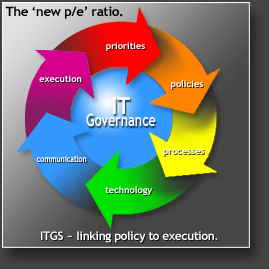
IT best practices need to be aligned to business requirements and integrated with one another and with internal procedures. IT best practices have become significant due to a number of factors:
- Business managers and boards demanding better returns on investments, i.e. IT delivers what the business needs to enhance stakeholder value.
- Increasing level of IT expenditure.
- Meet regulatory requirements for IT controls in areas such as privacy and financial reporting, e.g. the US Sarbanes-Oxley Act.
- Increasingly complex IT-related risks, such as network security.
- Need for organizations to assess how they are performing against generally accepted standards and relate to their peers.
IT governance is the difference between success and failure in today’s high technology environment. Organisations are more and more dependent on their information systems. Regulators and the public are increasingly concerned about the proper use of information, particularly personal data. The threats to information systems from criminals and cyber terrorists are increasing. The situation continues to deteriorate. Many organisations are identifying information as an area of their operation that needs to be protected through corporate governance plans as part of their system of internal control.